
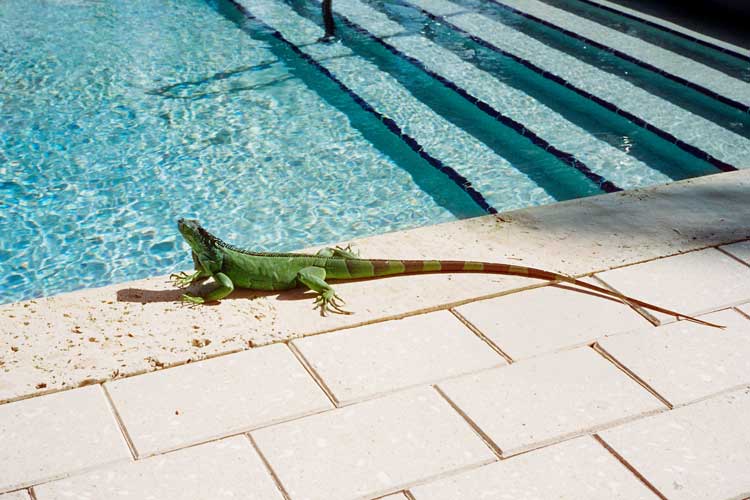
Why Iguanas Are Attracted to Pools and Patios
Pools offer everything iguanas love — warmth, water, and shelter. They often mistake pools for natural ponds or lagoons, making residential backyards an ideal habitat. Pool decks and surrounding vegetation provide food, cover, and basking spots.
Male iguanas are particularly territorial during mating season and may return repeatedly to the same property. Because they are cold-blooded, they seek heat from concrete, pavement, and pool tiles, especially during early mornings and cooler days.
Unfortunately, once a single iguana feels comfortable in a yard, more tend to follow. That’s why early detection and removal are crucial to preventing infestations.
The Trapping and Removal Process
When it comes to managing iguanas, professional removal is not just the most effective option — it’s also the safest. Iguanas are strong, fast, and can deliver a painful bite or whip with their tails when threatened. In addition, Florida law prohibits the relocation of iguanas without proper permits, which means homeowners cannot simply trap and release them elsewhere.
Here’s how professionals handle the process:
1. Property Inspection
The first step is a thorough property inspection. Trained specialists identify active burrows, nesting sites, feeding areas, and entry points around the property. They also assess environmental conditions that may attract iguanas, such as overgrown vegetation, open water sources, or fruit-bearing trees.
2. Humane Trapping
Once activity zones are confirmed, experts strategically set up live traps designed specifically for iguanas. These traps are baited with fruits and greens to draw them in. The process requires skill and patience since iguanas are intelligent and cautious. Professionals check traps frequently to ensure humane handling and quick removal once captured.
3. Safe Removal
Captured iguanas are carefully removed from the property following all state and local wildlife regulations. Licensed specialists ensure the animals are handled with care to minimize stress and harm. The removal process may also involve netting or hand-capture techniques for iguanas that are visible but not yet trapped.
4. Preventive Measures
After removal, professionals help homeowners address factors that attracted iguanas in the first place. This might include trimming vegetation near seawalls or pool areas, sealing burrow entrances, installing barriers, or removing fallen fruit. Preventive action helps ensure that once iguanas are gone, they stay gone.
5. Monitoring and Maintenance
Iguana populations can fluctuate seasonally, especially during breeding months. A monitoring program helps detect new activity early. Many removal companies offer maintenance plans to keep properties protected year-round.
The Importance of Professional Expertise
While DIY methods such as repellents or garden sprays are widely available, they are rarely effective against determined iguanas. In fact, untrained attempts at capturing or handling them can be dangerous and may even result in legal consequences if not done properly.
Professional trappers have the necessary permits, experience, and humane techniques to resolve infestations safely and efficiently. They also understand iguana behavior — knowing when they nest, where they hide, and how they move through the landscape — which is essential for long-term success.
Protecting Your Property the Right Way
South Florida’s unique environment makes it impossible to eliminate iguanas entirely, but it is possible to keep your home and property free of damage and health risks. A customized removal and prevention plan ensures your pool, patio, and landscape remain safe from these invasive reptiles year-round.
The key is to act early. Once iguanas establish burrows, their population can grow quickly, and repairs to seawalls or foundations can become costly. Working with professionals ensures a fast, compliant, and lasting solution.
Call the Experts at South Florida Iguana Removal
When iguanas start invading your property, don’t wait until the problem escalates. The experts at South Florida Iguana Removal specialize in humane trapping, removal, and prevention services tailored to the local environment. With years of experience serving residential and commercial clients across Miami-Dade, Broward, and Palm Beach Counties, their team delivers safe, reliable, and long-term results.
From thorough inspections to preventative strategies, South Florida Iguana Removal provides peace of mind that your property — and its wildlife — are being treated responsibly. Contact us today to schedule an inspection and take the first step toward an iguana-free home.
Frequently Asked Questions About Iguana Removal
Why are iguanas attracted to pools and patios?
Iguanas are drawn to pools and patios because these areas provide warmth, water, and easy access to food. The heat from concrete and pool decks helps regulate their body temperature, while nearby vegetation and fallen fruit offer a steady food source.
Are iguanas dangerous to humans or pets?
While iguanas are generally not aggressive, they can become defensive if threatened. They have sharp claws, strong tails, and can bite, which may cause injury. Their droppings can also carry bacteria, posing health risks around pools and outdoor living spaces.
Is it legal to trap and relocate iguanas in Florida?
No, in Florida it is illegal to relocate iguanas without proper permits. They are considered an invasive species, and strict regulations apply to their removal. This is why hiring licensed professionals is important to ensure compliance with state laws.
How can I prevent iguanas from coming back to my property?
Preventing iguanas involves removing what attracts them. This includes trimming vegetation, eliminating food sources like fallen fruit, sealing burrows, and installing barriers around vulnerable areas such as seawalls and patios.
Do iguana repellents or sprays actually work?
Most over-the-counter repellents and sprays offer limited results. Iguanas can quickly adapt to deterrents, especially if the environment still provides food and shelter. Professional removal and habitat modification are far more effective long-term solutions.
How quickly can an iguana problem get worse?
Iguana populations can grow rapidly, especially during breeding season. Once they establish burrows and feel safe in an area, more iguanas may follow. Early intervention is critical to avoid property damage and costly repairs.
